
Fine Dining Amid History: A Culinary Visit to Thornbury Castle
When most people imagine medieval feasts, visions of kings tossing half-eaten chicken legs across the table or a cavalcade of meats—including the more exotic choices like conger eel or porpoise—spring to mind. Thankfully, dining at Thornbury Castle is a far more refined experience, where history and haute cuisine come together in understated elegance.
The castle, once owned by Edward Stafford in the 1500s, has a storied past. Stafford eventually lost it to a jealous Henry VIII, who later entertained Anne Boleyn here before her infamous downfall. Today, the castle’s stone courtyards, sweeping staircases, grand lounges, and opulent bedrooms provide a magnificent backdrop for a meal that blends tradition with modern flair.
Dining at Thornbury Castle is an intimate affair. The restaurant’s ground-floor circular dining room, anchored by a massive fireplace, is dressed with heavy white linen—a nod to classical fine dining, now a rare sight in many modern establishments. Executive Head Chef David Williams, who recently retained the hotel’s 3 AA Rosettes, oversees the kitchen with a menu that balances seasonal freshness and creative flair. A three-course meal offers three choices per course at £75 per person, with options available à la carte or as part of tasting menus.
After sipping drinks in the serene Privy Garden, we settled into the dining room and let the menu guide us. Our amuse-bouche, a frothy avocado creation, set a playful yet sophisticated tone. We then moved on to Pâté en Croûte with Rare Bread Pork and the hotel’s own Piccalilli. A staple of classical French cuisine, this “game pie” style dish delighted with its crisp pastry, well-seasoned pork filling, and subtle layer of jelly. The tangy Piccalilli cut through the richness beautifully. While Henry VIII might have demanded larger portions, today’s balance feels just right, allowing the flavors to shine.
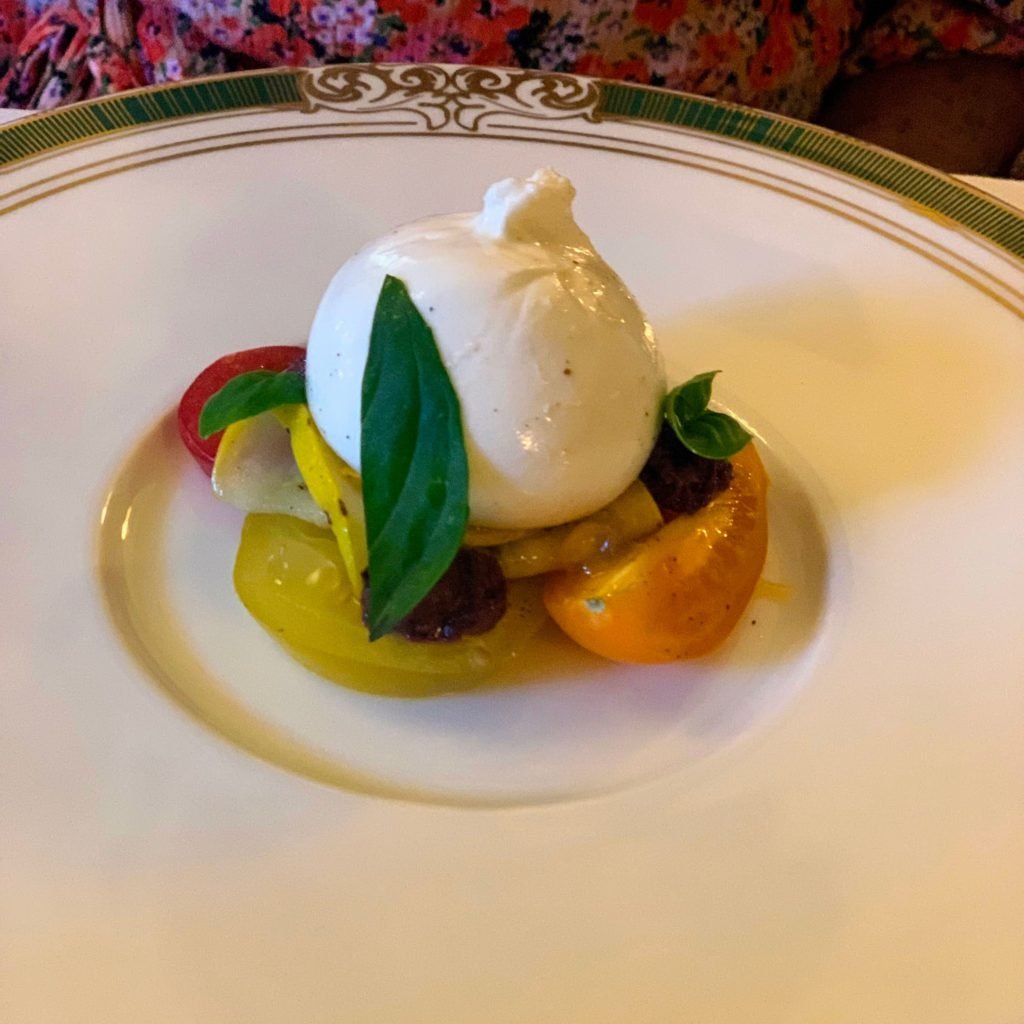
For lighter fare, Burrata with heritage tomatoes, balsamic vinegar, and olives was a triumph. The creamy cheese oozed invitingly across the plate, mingling with sweetly sharp vinegar and perfectly ripened tomatoes. Their natural acidity and vibrant colors made this deceptively simple dish memorable.
Main courses were equally compelling. Succumbing to a nod to Henry, I indulged in a perfectly cooked fillet of beef, accompanied by an elegant rösti, bright carrots, and lightly wilted spinach. Across the table, a seafood medley of hake, salt cod, clams, mussels, and shrimp showcased how careful execution allows each element to shine while still harmonizing into a cohesive, flavorful whole.
Desserts at Thornbury Castle offered both beauty and balance. Mango crémeux with Thai basil and coconut ice cream was visually stunning and decadently smooth, while a vanilla and strawberry cheesecake provided a refreshing, stylish finish.
Service throughout was impeccable—attentive yet unobtrusive, allowing diners to enjoy the meal and the ambiance without distraction. There’s a fine line between helpful and overbearing, and the team here treads it perfectly.
What sets Thornbury Castle apart is its ability to deliver modern, sophisticated food within an ancient, storied environment. Many historic hotels fall short when it comes to culinary excellence, but here, the food, service, and setting combine to make a thoroughly satisfying experience. For those seeking a meal where history meets haute cuisine, Thornbury Castle offers both in generous, elegant measure.
Thornbury Castle – Dining Room
With its rich history, stunning architecture, and modern culinary prowess, Thornbury Castle proves that dining in a castle doesn’t have to mean medieval excess—it can be a refined, memorable journey for both the palate and the imagination.